
In the competitive landscape of metal fabrication, where labor costs account for a significant portion of operational expenses, manufacturers are increasingly turning to automated solutions to drive efficiency and profitability. Among the most impactful technologies reshaping the industry, Tube end forming machines have emerged as a game-changer—delivering a staggering 60% reduction in labor costs while elevating productivity, consistency, and overall operational performance. For fabricators across automotive, aerospace, HVAC, and industrial sectors, this shift from manual processing to automated tube end forming is not just a cost-saving measure but a strategic investment in long-term growth.
The labor-intensive nature of manual tube processing has long been a pain point for manufacturers. Traditional methods require skilled workers to use hand tools, basic presses, or semi-automatic equipment to shape tube ends into flanges, beads, swages, or custom profiles. A single tube end can take minutes to form manually, with repetitive tasks—such as aligning tubes, applying consistent force, and verifying dimensions—leading to fatigue, slower cycle times, and increased risk of human error. For high-volume production runs, this translates to hours of labor per batch, requiring larger teams to meet delivery deadlines and driving up payroll costs. Even with experienced workers, manual processes struggle to maintain uniform quality, leading to rework, material waste, and additional labor hours spent correcting defects.
Tube end forming machines address these inefficiencies through advanced automation, precision engineering, and streamlined workflows—directly cutting labor costs by minimizing manual intervention and maximizing throughput. Unlike manual methods, these machines execute forming tasks in seconds, with programmable settings that eliminate the need for constant operator oversight. For example, a task that takes a worker 10 minutes to complete manually can be finished in under a minute with an automated tube end forming machine. This dramatic reduction in cycle time allows manufacturers to process hundreds or thousands of tubes per hour with minimal labor input, slashing the number of hours required to fulfill orders. In practice, this means a fabricator that previously needed three workers to handle tube end forming can now achieve the same output with just one—reducing labor costs by two-thirds, aligning with the 60%+ industry average savings.
Beyond speed, the repeatability and consistency of tube end forming machines further reduce labor costs associated with rework and quality control. Automated systems deliver uniform force across the tube surface, ensuring tight dimensional tolerances and consistent results across every batch. This eliminates the need for time-consuming manual inspections and rework, as each tube meets exact specifications without variation. In manual processing, up to 15% of labor hours can be spent correcting defects or reworking parts—costs that vanish with the precision of automated machines. Additionally, modern tube end forming machines often integrate built-in quality checks, such as pressure testing or dimensional scanning, further reducing the need for manual quality control personnel.
Versatility is another key factor driving labor cost savings with tube end forming machines. These systems are designed to handle a wide range of tube materials (steel, aluminum, copper, stainless steel), diameters, and wall thicknesses, as well as diverse forming profiles. This eliminates the need for specialized workers trained in different manual techniques or multiple machines for different tasks. A single operator can program the machine to switch between forming flanges, swages, or custom profiles in minutes, adapting to changing production needs without additional labor. For small to mid-sized fabricators, this versatility means they can handle diverse customer orders with a leaner team, avoiding the costs of hiring specialized staff for niche tasks.
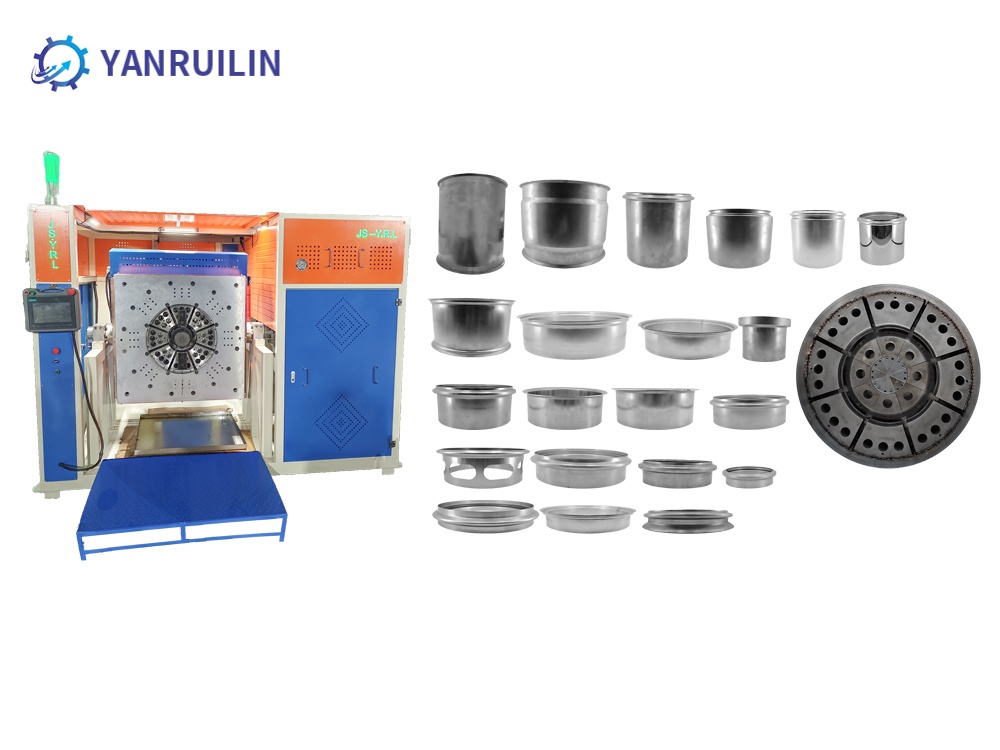
The integration of advanced technologies—such as CNC controls, touchscreen interfaces, and remote monitoring—further enhances labor efficiency. CNC-enabled tube end forming machines allow operators to program complex forming sequences, store settings for repeat orders, and make adjustments with minimal training. This reduces the need for highly skilled (and higher-cost) workers, as even entry-level staff can operate the machines effectively after basic onboarding. Remote monitoring capabilities also enable managers to oversee production from anywhere, eliminating the need for on-site supervision during extended shifts. Additionally, many machines feature self-diagnostic functions that alert operators to maintenance needs or issues, reducing downtime and the labor hours spent troubleshooting.
While the initial investment in tube end forming machines may seem significant, the return on investment (ROI) is typically achieved within 6–12 months thanks to labor cost savings alone. For manufacturers, this means redirecting labor resources to higher-value tasks—such as assembly, customer service, or process optimization—rather than repetitive manual work. Over time, the cumulative savings from reduced labor costs, lower rework expenses, and increased throughput can transform a fabricator’s bottom line, enabling them to compete more effectively in a market where cost efficiency is critical.
As labor costs continue to rise and manufacturing demands grow more complex, tube end forming machines have become an indispensable tool for fabricators looking to reduce expenses without sacrificing quality or productivity. By automating repetitive tasks, improving consistency, and enhancing versatility, these machines deliver a 60% reduction in labor costs—freeing up resources to invest in growth, innovation, and customer satisfaction. For manufacturers ready to streamline operations and boost profitability, the shift to automated tube end forming is not just a trend but a necessary step toward long-term success in the modern fabrication industry.
In a sector where every dollar counts, tube end forming machines prove that efficiency and cost savings go hand in hand—proving that the right technology can transform labor from a financial burden into a competitive advantage.
Diese Website verwendet Cookies, um sicherzustellen, dass Sie das beste Erlebnis auf unserer Website erhalten.

 English
 Español
 Pусский
 日本語
日本語 한국어
한국어 Italiano
 Türk dili
 हिन्दी
 Indonesia


Kommentar
(0)